





Polyisocyanurate
Polyisocyanurate (PIR or Polyiso) foam insulation is known for its high thermal resistance as well as fire resistance compared to other foam insulants. Its behaviour under fire conditions has though recently come under great scrutiny since the role of Celotex RS5000 PIR insulation in the Grenfell tragedy in London UK in 2017. It has commonly for many years been used in commercial roofing systems, wall insulation, cladding systems in many modern buildings and as a component in structural insulated panels (SIPs). It ia also commonly used for industrial and commercial pipe insulation, laminated to aluminum foil and used for fabrication of pre-insulated duct that is used for heating, ventilation and air conditioning systems.
The core materials of PIR are similar to those used in polyurethane (PUR) except that the proportion of methylene diphenyl diisocyanate (MDI) is higher and a polyester-derived polyol is used in the reaction instead of a polyether polyol. The resulting chemical structure is significantly different, forming isocyanurate groups which the polyols link together, giving it a complex polymeric structure.
This structure means that PIR was generally accepted as performing significantly better than PUR against fire, previously thought to have excellent fire behaviour from being tested to high standards, the Grenfell tragedy bought much of this into question. Shortly after the fire on June 23 2017, the Police confirmed that small-scale fire tests had been carried out and Detective Superintendent Fiona McCormack commented "The insulation was more flammable than the cladding. Testss how the insulation samples combusted soon after the test started."
[edit] Related articles on Designing Buildings
- Acrylic.
- An in-depth look at Environmental Product Declarations EPDs.
- Celotex RS5000 PIR insulation.
- Composites.
- ETFE.
- Fire behaviour of expanded polystyrene.
- Forever Chemicals.
- Glass reinforced plastic.
- Grenfell Tower fire.
- Insulation.
- LPCB certification and Kingspan.
- Loss Prevention Standard.
- Packaging.
- Plastic.
- Polyethylene.
- Polyurethane (PUR).
- Polystyrene.
- Persistent organic pollutants (POP)
- Phenolic foam insulation.
- Polyurethane spray foam in structurally insulated panels and composite structures..
- Sandwich panel.
- Specifying insulation for inverted roofs.
- Thermal insulation for buildings.
- Transparent insulation materials.
- Types of insulation.
- Types of plastic in construction.
- What do design professionals need to know about U-value calculation conventions?
Featured articles
Check out some of the best features and news from Designing Buildings as well as key stories from around the web.

Why construction can't afford to ignore the skills gap.
Building Safety Regulator, 19 August

Gill Kernick appointed Independent Chair of Residents’ Panel.
Connecting knowledge, technology and conservation
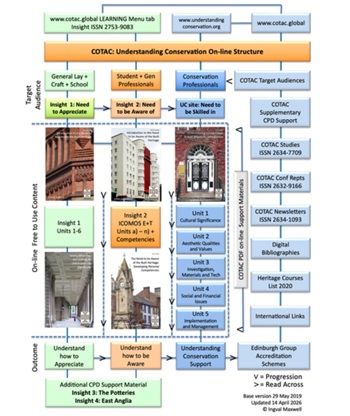
Building competence for the future of built heritage.
Building Regulations and Building Safety Act
CIOB publishes free advice for non-domestic clients.

Building Safety Newsletter from MHCLG.

An extraordinary record of steel engineering worldwide.
Households living near new pylons to save on bills.

ECA warns growth must not outpace grid capacity or skills.
The role of the client and decision making

CIOB response to built environment professions call for evidence.
Construction's sustainability reporting revolution
Tracking upfront embodied carbon with digital tools.
ECA welcomes procurement reforms
Public spending must back British jobs and skills.
Campaigning for Edinburgh: the Cockburn Association 1875-2049

The role of the civic voice in protecting character. Book review.